
Content:
- 1. What Is Biomimetic Dentistry?
- 2. Why Does Natural Tooth Preservation Matter?
- 3. How Biomimetic Dentistry Connects to Composite Fillings, Crowns, and Restorations
- 4. When Might Someone Need Biomimetic Dentistry?
- 5. Biomimetic Dentistry vs. Traditional Restorative Dentistry
- 6. Is Biomimetic Dentistry Cosmetic or Restorative?
- 7. Why Dental Exams Are Important for Biomimetic Dentistry
- 8. What to Expect When Asking About Biomimetic Dentistry
- 9. Key Takeaway
- 10. Why Choose Family Dentistry on Locke?
- 11. FAQs About Biomimetic Dentistry
- 11.1. What does biomimetic dentistry mean?
- 11.2. Is biomimetic dentistry the same as cosmetic dentistry?
- 11.3. Can biomimetic dentistry help with cavities?
- 11.4. Are composite fillings part of biomimetic dentistry?
- 11.5. Is biomimetic dentistry good for cracked teeth?
- 11.6. Is biomimetic dentistry suitable for every patient?
- 12. Contact Family Dentistry on Locke
Biomimetic Dentistry is a conservative approach to restorative dental care that focuses on repairing damaged teeth while preserving as much healthy tooth structure as possible. Instead of simply covering a problem, this philosophy aims to restore teeth in a way that closely imitates their natural strength, function, and appearance.
For patients in Hamilton who want natural-looking dental restorations, biomimetic dentistry offers a thoughtful way to approach tooth repair. It supports the use of careful diagnosis, minimally invasive techniques, and lifelike materials whenever appropriate.
At Family Dentistry on Locke, patients can access comprehensive dental care in Hamilton, including dental exams and cleanings, composite fillings, crowns, dental X-rays, root canal therapy, and restorative treatments. These services help identify dental concerns early and restore damaged teeth with comfort, function, and long-term oral health in mind.
What Is Biomimetic Dentistry?
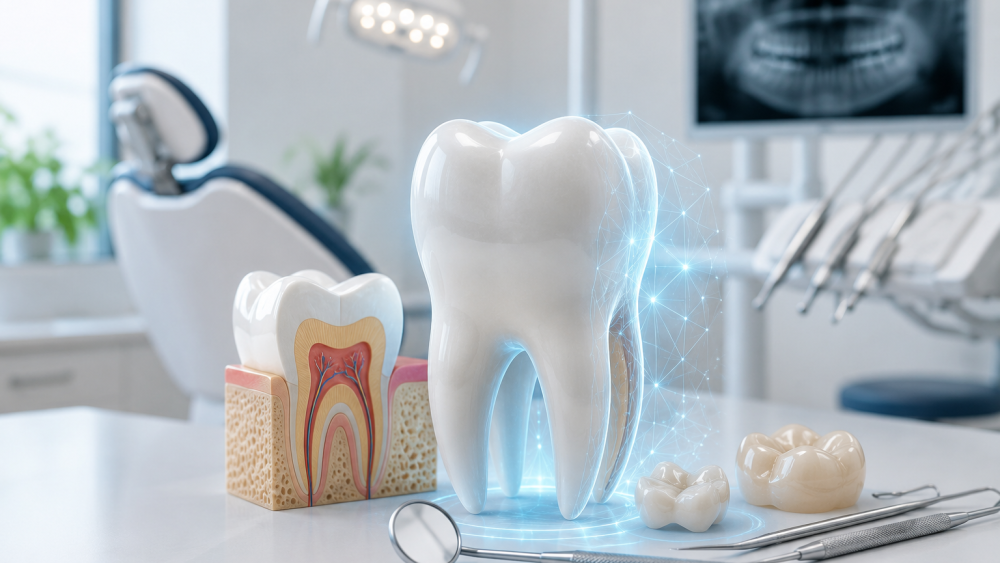
Biomimetic dentistry is a tooth-preserving dental approach that restores damaged teeth by mimicking the natural structure and function of enamel and dentin. The word “biomimetic” means to imitate nature. In dentistry, that means repairing teeth in a way that respects how natural teeth are designed to work.
A healthy tooth is strong, flexible, and able to handle daily chewing pressure. Enamel protects the outside of the tooth, while dentin provides internal support. When decay, cracks, wear, or old fillings weaken a tooth, the goal is not only to fix the visible damage. The goal is to restore the tooth in a way that supports its natural function.
This is why biomimetic dentistry is often associated with conservative restorative dentistry, tooth-colored fillings, bonded restorations, porcelain or ceramic materials, and minimally invasive treatment planning.
Why Does Natural Tooth Preservation Matter?
Natural tooth structure is valuable because once enamel or dentin is removed, it does not grow back. A conservative dental approach focuses on keeping as much healthy structure as possible while still treating decay, fractures, or weakness.
This matters because the more healthy structure a tooth keeps, the more support it may have for future function. A carefully planned restoration can help protect weakened areas, improve appearance, and reduce the need for unnecessary tooth reduction.
For patients, biomimetic dentistry is not only about aesthetics. It is about restoring a tooth so it can look natural, feel comfortable, and function properly during daily use.
How Biomimetic Dentistry Connects to Composite Fillings, Crowns, and Restorations
Biomimetic dentistry is closely related to restorative dental care because both focus on repairing damaged or weakened teeth. The difference is that biomimetic dentistry places extra emphasis on preserving healthy structure and choosing materials that behave more like natural teeth.
Composite fillings are a common example. They are tooth-colored restorations used to repair teeth affected by decay, cracks, fractures, or minor damage. Because they can be matched to the surrounding tooth shade, they are often used when patients want a natural-looking result.
Crowns may be recommended when a tooth needs more protection and support. A crown can help restore chewing function and appearance when a tooth is severely weakened, cracked, worn down, or affected by a large restoration.
In a biomimetic approach, the treatment recommendation depends on the condition of the tooth. If a smaller bonded restoration can protect the tooth, that may be considered. If the tooth needs stronger coverage, a crown may still be the better option.
When Might Someone Need Biomimetic Dentistry?
A biomimetic dentistry approach may be helpful for patients who have damaged teeth but want to avoid unnecessary removal of healthy structure when possible.
Patients may ask about biomimetic dentistry if they have cavities, early tooth decay, cracked teeth, chipped teeth, worn-down teeth, old fillings that need replacement, or sensitivity related to enamel wear. It may also appeal to patients who want restorations that blend naturally with their smile.
Patients searching for biomimetic dentistry in Hamilton are often looking for a conservative, natural-looking approach to restorative care. However, the right treatment always depends on a dental exam, X-rays when needed, and a personalized diagnosis.
Biomimetic Dentistry vs. Traditional Restorative Dentistry
Traditional restorative dentistry and biomimetic dentistry can both repair damaged teeth. The main difference is the treatment philosophy.
| Traditional Restorative Dentistry | Biomimetic Dentistry |
| Focuses on repairing damaged teeth | Focuses on restoring teeth by imitating natural structure |
| May require more tooth reduction depending on the case | Prioritizes preserving healthy tooth structure when possible |
| Often uses fillings, crowns, bridges, or other restorations | Uses conservative and bonded restorations when appropriate |
| Restores strength and function | Restores strength, function, and natural appearance |
| Can be necessary for advanced damage | Often preferred when a conservative option is suitable |
This does not mean biomimetic dentistry replaces traditional restorative care. Some teeth need more extensive treatment. The goal is to choose the most appropriate option based on the health, structure, and function of the tooth.
Is Biomimetic Dentistry Cosmetic or Restorative?
Biomimetic dentistry can improve the appearance of a smile, but it is not only cosmetic. Its main purpose is to restore damaged teeth in a way that supports natural function and long-term oral health.
Because this approach often uses tooth-colored materials, the final result can look very natural. However, the value goes beyond appearance. A good restoration should also help the tooth chew properly, protect weakened areas, and blend comfortably with the bite.
This makes biomimetic dentistry useful for patients who want dental care that is functional, conservative, and aesthetic at the same time.
Why Dental Exams Are Important for Biomimetic Dentistry
Biomimetic dentistry works best when dental problems are found early. A small cavity, minor crack, or worn filling is usually easier to treat conservatively than a tooth with severe decay, deep fractures, or infection.
Regular dental exams and cleanings help the dentist detect problems before they become more complex. During a dental exam, the dental team may check for cavities, gum health, signs of wear, existing restorations, bite concerns, and other oral health issues. Dental X-rays may also be recommended to see areas that are not visible during a visual exam.
Early diagnosis gives patients more treatment options. In some cases, a conservative filling may be enough. In others, a crown, root canal therapy, or another restorative treatment may be needed to protect the tooth.
What to Expect When Asking About Biomimetic Dentistry
Patients interested in biomimetic dentistry can start by scheduling a dental visit and explaining their concerns. The dentist can evaluate the tooth, review symptoms, and recommend the most appropriate treatment.
The visit may include a dental evaluation, digital X-rays if needed, a discussion of treatment options, and a personalized care plan. The final recommendation depends on the patient’s oral health, comfort, goals, and long-term dental needs.
Key Takeaway
Biomimetic dentistry is a conservative approach to restoring teeth by preserving healthy structure and using materials that imitate the look and function of natural teeth. For patients in Hamilton, this approach may be especially valuable when treating cavities, cracks, worn teeth, old fillings, or damaged restorations.
Rather than focusing only on repairing a problem, biomimetic dentistry asks a more complete question: how can the tooth be restored while keeping it as natural, strong, and functional as possible?
Why Choose Family Dentistry on Locke?
Family Dentistry on Locke provides comprehensive dental care for patients in Hamilton, offering preventive, restorative, and cosmetic procedures for different oral health needs. Their services include dental exams and cleanings, composite fillings, crowns, dental X-rays, root canal therapy, dental implants, extractions, and other procedures designed to support healthy smiles.
For patients interested in biomimetic dentistry, the team can evaluate the condition of the tooth and explain whether a conservative restorative option may be appropriate. Whether the concern is a cavity, cracked tooth, worn restoration, or natural-looking dental repair, the goal is to recommend care based on the patient’s needs.
FAQs About Biomimetic Dentistry
What does biomimetic dentistry mean?
Biomimetic dentistry means restoring teeth in a way that imitates natural tooth structure. It focuses on preserving healthy enamel and dentin while using materials that look, feel, and function like natural teeth.
Is biomimetic dentistry the same as cosmetic dentistry?
No. Biomimetic dentistry may improve the appearance of a tooth, but it is mainly a restorative approach. Its goal is to restore function, preserve natural structure, and create a result that blends with the smile.
Can biomimetic dentistry help with cavities?
Yes. When a cavity is found early, a biomimetic dentistry approach may help restore the tooth conservatively. The dentist removes the damaged area and uses a restoration that supports the remaining structure.
Are composite fillings part of biomimetic dentistry?
Composite fillings can align with biomimetic dentistry principles because they are tooth-colored, bond to the tooth, and can repair damaged areas while maintaining a natural appearance.
Is biomimetic dentistry good for cracked teeth?
Biomimetic dentistry may help with some cracked teeth, depending on the depth and severity of the crack. Some cases may be treated with bonded restorations, while others may need crowns or additional care.
Is biomimetic dentistry suitable for every patient?
Not always. The right treatment depends on the tooth’s condition, the amount of remaining structure, bite pressure, symptoms, and overall oral health. A dental exam is needed to determine the best option.
Contact Family Dentistry on Locke
If you are interested in biomimetic dentistry in Hamilton, Family Dentistry on Locke can help you understand your restorative options. Whether you have a cavity, cracked tooth, old filling, or damaged restoration, the dental team can evaluate your smile and recommend care based on your needs.
Phone: (905) 525-9414
Address: 101 Locke St S Suite 1A, Hamilton, ON L8P 4A6, Canada
This article is for educational purposes only and does not replace a professional dental consultation. Schedule an appointment with Family Dentistry on Locke to receive personalized recommendations for your oral health.